Start here
House of Strauss: worth it?
Is the House of Strauss concert in Vienna's Döbling district worth the trip? What the ticket covers, who it suits and who should look elsewhere.
Check the concert dates ↗Quick answer
Yes, for most visitors who want a classical concert with a story around it. The ticket covers museum entry, a glass of sparkling wine and about 75 minutes of music by an orchestra and a soprano, in a restored hall of 1837 in Döbling, Vienna's 19th district. The hall and the Strauss family are the draw, and the ride out of the centre is the cost. Skip it if you want a famous-name hall in the old town.
The short answer
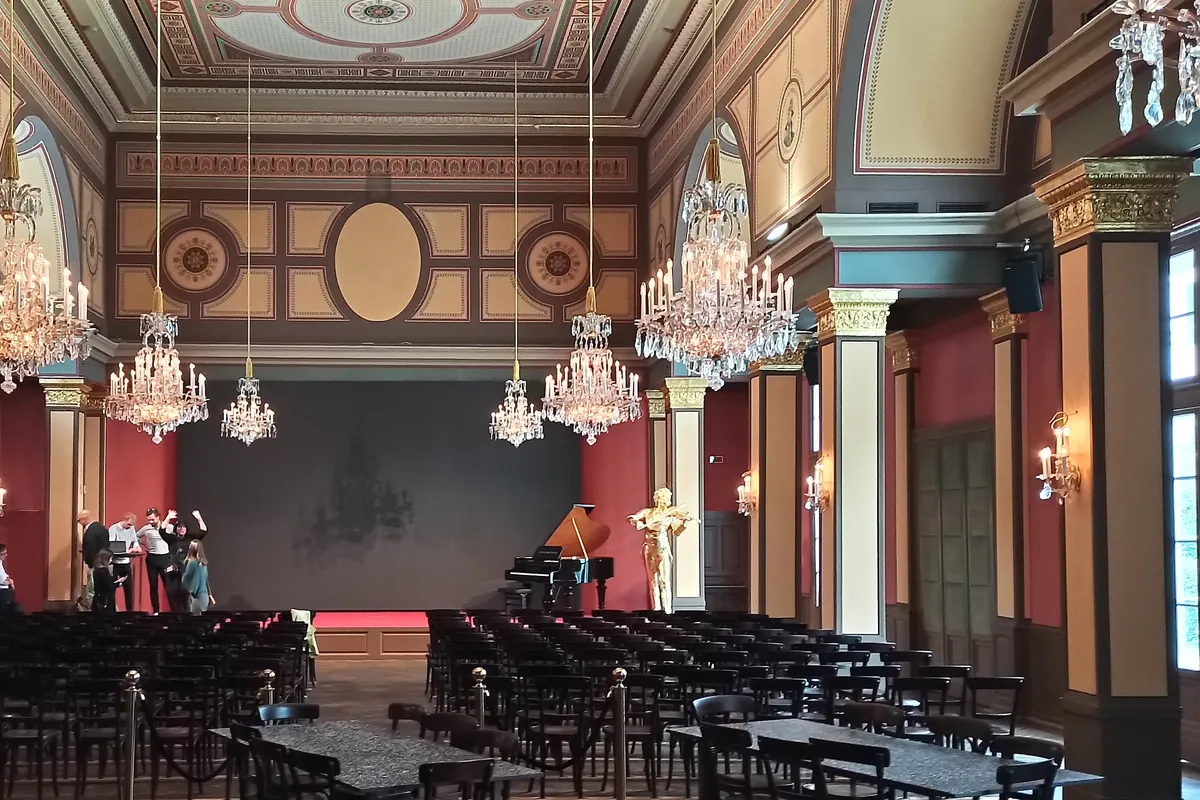
Yes, for anyone who enjoys classical music and wants an evening with some history attached. Recent verified reviews, as the booking page sums them up, single out the musicians and the soprano and say the museum and the visuals give the music some context in an elegant room. It also reports that some travellers would like more comfortable seating. That is the trade in two lines: the hall, the music and the Strauss story are the draw, while the chairs and the trip out to Döbling are the price. The rest of this guide takes each part in turn, then says plainly who should look elsewhere. Allow the whole evening, not only the concert: doors open 90 minutes early and the museum stays open afterwards.
What the one ticket contains
The booking page lists admission to the House of Strauss Museum, a glass of sparkling wine at a reception and a concert in the Strauss Hall by an orchestra and a soprano. It gives the address as Döblinger Hauptstraße 76, in Vienna's 19th district, and says doors open 90 minutes before the concert, which runs about 75 minutes, with the museum open before and after. It adds reserved seating, wheelchair access and a concert in English with German and Chinese subtitles. The House of Strauss's own concerts page describes the same three parts: a concert, a visit to the museum and a glass of sparkling wine. Dinner and a children's concert are separate tickets, and House of Strauss is the activity provider the page names.
What the evening is, and is not
The concert is a classical programme with staging around it. A cinematic narrative traces the rise of the Strauss dynasty and a light show plays across the hall, and the House of Strauss's concerts page calls it a live concert with surround sound. It is not a staged opera, a ballet or a dinner. It is about 75 minutes of music in a historic room, built around one family and the composers who shared its city: Mozart, Beethoven, Schubert and Brahms are named beside the Strausses. Orchestras change their programmes, so take the composers named on the page as a hint of the music, not a list of what will be played. The orchestra is the House of Strauss's own, according to its concerts page.
Why the hall matters
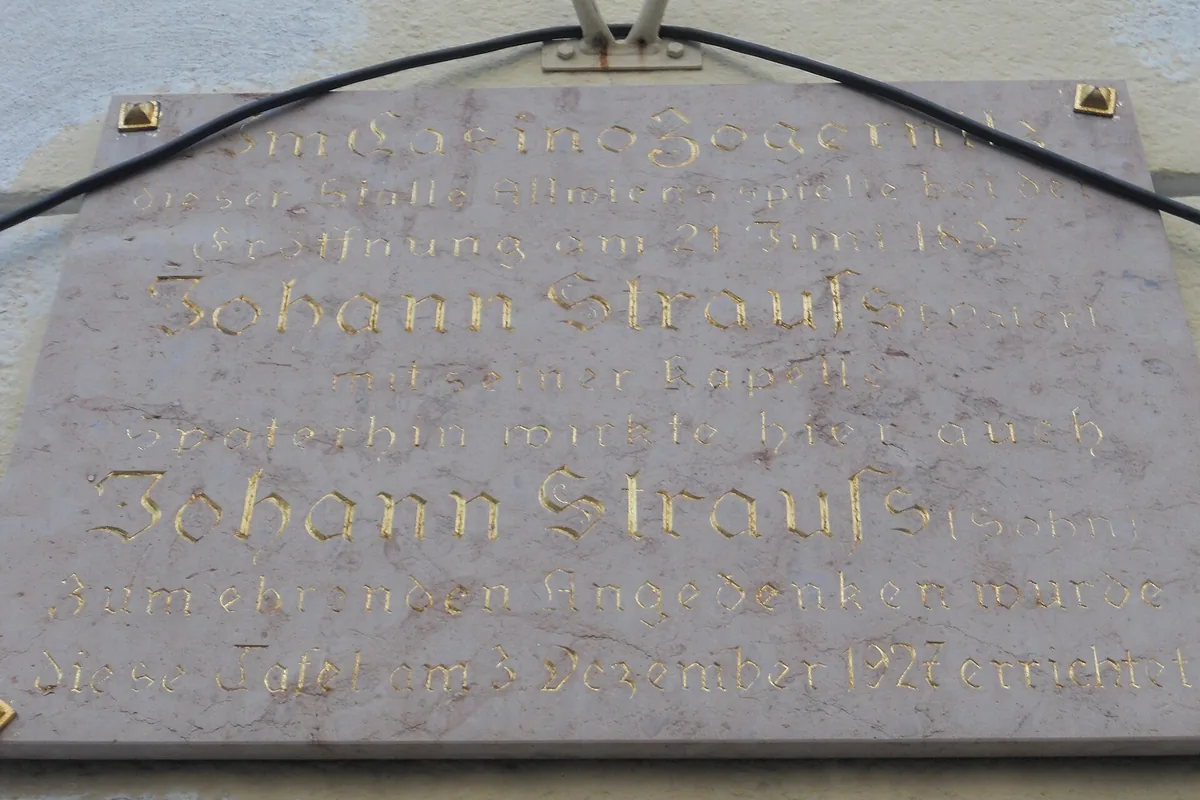
The hall is older than the museum around it. The House of Strauss's history page says Ferdinand Zögernitz had a Biedermeier-style residence built on former imperial property and that the Casino Zögernitz opened in 1837, with a richly decorated hall and a garden that became a meeting place for Viennese society. A marble plaque on the façade, erected in 1927, records that Johann Strauss played at the opening with his orchestra and that his son worked there later. The House of Strauss calls it the last remaining original venue where all four Strauss composers performed. The hall was listed as a historic monument in 2008, and a restoration in coordination with the Federal Monuments Office began in 2017. The guide to the hall has the full history.
Read next: The 1837 Strauss Hall
Why Döbling
Döbling is the 19th district, in the north of Vienna on the slopes of the Vienna Woods, known for its Heurigen wine taverns in villages such as Grinzing. Wikipedia lists Beethoven among its notable residents, with an address on Döblinger Hauptstraße itself where he composed substantial parts of the Eroica Symphony, and lists Johann Strauss I and II at another address in the district. Johann Strauss I wrote a waltz titled for Döbling, the Döblinger Réunion-Walzer, as his Op. 2. So the trip is not arbitrary: this is a district with real links to the music you are about to hear. Johann Strauss I was buried in the district's cemetery, now the Strauss-Lanner Park, before his remains moved in 1904.
What reviewers agree on
Reviews on the booking page fall into a pattern. Travellers praise the musicians and the soprano, and one calls the lead violinist exceptional. Several say the museum and the film add context, and a reviewer who had never been to a classical concert says it blew them away. The criticisms are narrow: some would like more comfortable seats, one would have liked more on Vienna in the Strauss heyday in the film, and another thought the museum tour needed a live guide. A summary on the page, drawn from verified reviews of the past year, calls it a worthwhile and memorable evening. A reviewer also mentions a cloakroom and water at the reception, and says the staff were very helpful.
The value case
The booking page's price covers three things at once, so judge it as a bundle. The museum is an audiovisual exhibition on the Strauss dynasty and its time. The sparkling wine is one glass at the reception. The concert is the main item, which the page calls intimate, in a room with a real place in the family's story. If you would use all three, the evening is fuller than a bare concert seat. If you only want music and plan to arrive at the last minute, you are paying for a museum you will not see, and a concert nearer your hotel may suit you better. The comparison guide weighs the two options.
Which seat, and what to wear
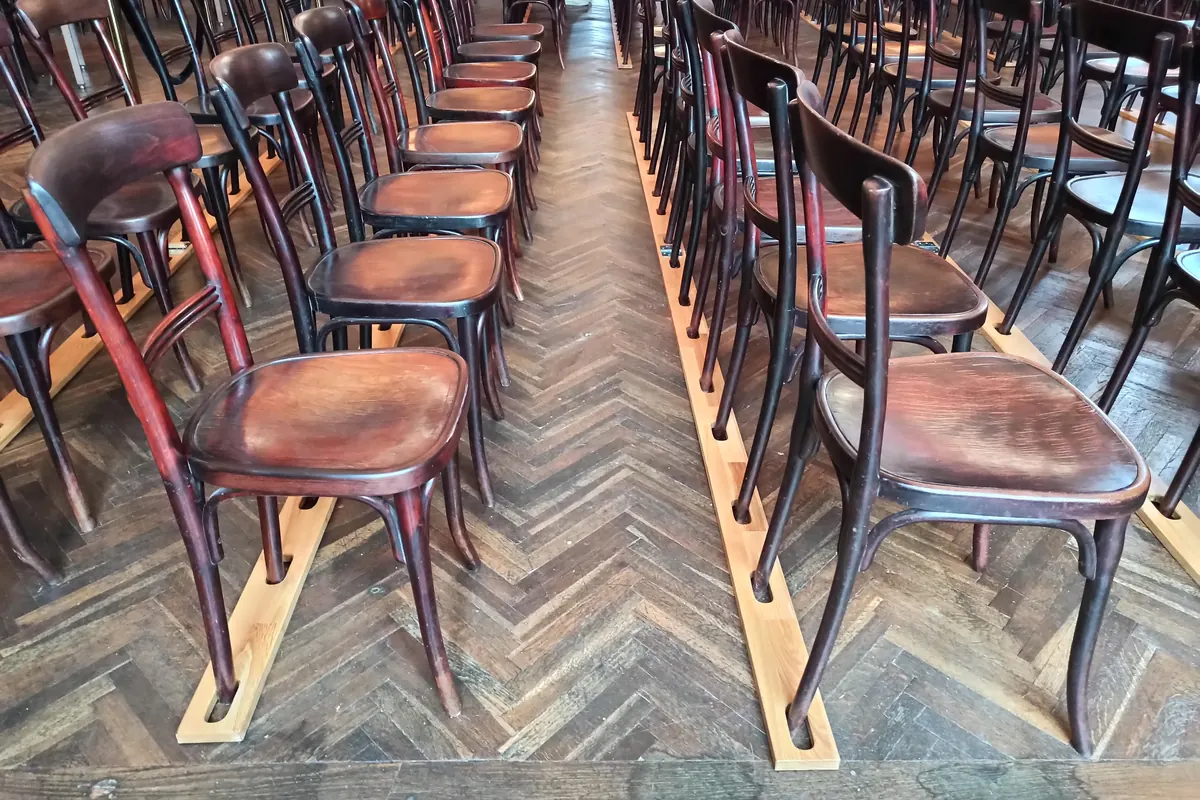
Seats are reserved, so there is no scramble for a place. The page describes reserved seating on historic Thonet chairs, which it calls original 19th-century ones, and a summary of reviews notes that some travellers would like cushions. One reviewer calls the VIP seats cushioned and worth it, and another was upgraded to VIP; the booking calendar shows which seat options exist for your date. The page gives no dress code. A general guide to concert etiquette says smart casual is the usual dress for audiences in English-speaking countries, and that people aim to be in their seats before the first note. One reviewer found a small crowd on the night they went, which may differ on your date.
Read next: What to wear and when to clap
Who it suits
It suits visitors who want the Strauss story and a classical concert in one ticket, couples and friends who like a museum visit with their music, and anyone staying on the north side of the city. It suits first-time concertgoers too, since the film explains the history as it goes. Families with older children who can sit through 75 minutes will also find it workable; the House of Strauss sells a separate interactive children's concert, which is a different ticket with its own page. People who like to read every panel in a museum should use the early doors-open window, and travellers who enjoy a museum before the music will get the most from the extra time that the doors-open window allows.
Who this isn't for
Look elsewhere for a famous-name hall in the old town, a staged opera or a dinner with the music. The ticket is a concert with a museum and one glass of wine, and dinner is a separate House of Strauss ticket. It also fits badly if you cannot spare the time to travel out to Döbling and back, or if the museum holds no interest, because the price counts it in. Anyone who needs cushioned seating should check the seat options on the booking calendar before paying. A fixed late dinner is also a poor fit, since the doors-open window and the concert together fill much of an evening.
Booking
Go to the booking page, choose a day and note the start time and the seats offered for it. Your confirmation repeats the time, and that is the one to follow on the day. Cancelling a GetYourGuide booking at least 24 hours ahead returns the full amount, and paying can be deferred. Prices are left out of this guide because they change; the calendar shows the current one in your currency. If you are still weighing a concert in the old town against this one, the next guide sets them side by side. Wheelchair access is listed on the booking page, and the House of Strauss asks guests needing barrier-free arrival to contact its team.
Read next: Döbling or the centre?
Frequently asked questions
Is the House of Strauss concert worth it?
Yes, if you want a classical concert with a museum visit and a glass of sparkling wine in one booking and you are content to travel to Döbling. Reviewers praise the soprano and the orchestra. If you want a famous-name hall in the centre, look elsewhere.
What does the ticket include?
Museum entry, a glass of sparkling wine and a reserved seat at the concert, according to the booking page. Dinner is not part of it; the House of Strauss sells that as a separate ticket.
How long does the evening last?
The concert runs about 75 minutes. Doors open 90 minutes before it and the museum is open before and after, so the whole evening can run well past the music.
What language is the concert in?
English, with German and Chinese subtitles, according to the booking page.
Who plays?
An orchestra and a soprano. The programme and the performers can vary by date, so read your confirmation.
What if my plans change?
Yes. Cancelling at least 24 hours ahead returns the full amount of a GetYourGuide booking, and paying can be deferred.
Sources